Work
Your Last Wireframe
There’s a scene that’s playing out in design studios and remote Slack channels across the world right now.
A product designer opens a browser tab, types a prompt “a multi-step onboarding flow, clean, minimal, mobile-first” and watches a working, clickable prototype appear in under two minutes. No Figma frames, component libraries or hours lost to spacing tokens. Just output.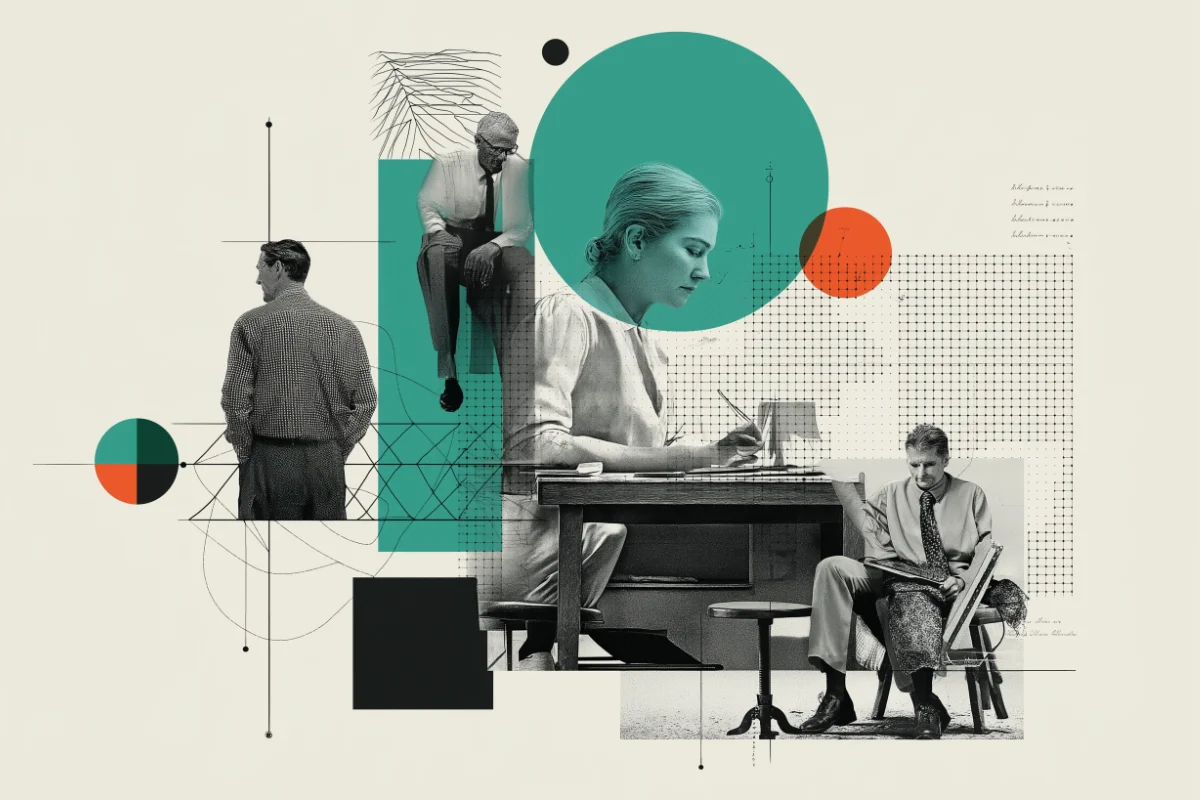
From weeks to minutes:
The prototyping revolution.
Tools like v0, Lovable, Bolt, Uizard, and Figma's own AI-powered Make feature have fundamentally compressed one of the most time-consuming parts of a product designer's job.
So, now that the machine can handle the scaffolding, what is the designer actually for?
From low to high fidelity
To understand how significant this shift is, it helps to remember what prototyping used to cost. Not long ago, creating a new digital product meant spending weeks and months planning, wireframing, and building something tangible before a single user could react to it.[1] High-fidelity prototyping in tools like Figma or Framer demanded steep time investments. Translating an idea from your head into something testable often meant hours of perfecting animations, managing component overrides, and battling auto-layout.[2]
Today, AI-powered platforms can spin up interactive prototypes in a matter of hours. Tools like Bolt and v0 transform natural language prompts into functional, code-based prototypes that designers can put in front of real users almost immediately.[3] Nielsen Norman Group, in their rigorous evaluation of AI prototyping tools, confirmed that these systems are now capable enough to generate useful concepts for early-stage ideation, rapidly turning broad text prompts into tangible, clickable experiences.[4]
Figma's own AI suite now lets designers prompt prototypes, generate code layers, and push their designs directly into agentic coding environments. This is collapsing the design-to-development handoff that once consumed entire sprints.[6]
What's being automated isn't just the grunt work. AI is beginning to absorb the structure of design thinking. AI can handle the layout logic, the interaction patterns, the component defaults, the decisions that an experienced designer has internalised after years of practice. This is genuinely remarkable. It is also, for anyone who has spent a career in product design, a little unsettling.
The tools are not the differentiator.
As AI lowers the barrier to building, more people — product managers, engineers, founders and marketers can now generate passable UI without a designer in the room. As Atlassian's design team put it, people without design or engineering backgrounds are already building zero-to-one products with ease.[7] The screens look fine. The flows make sense. There are no obvious usability catastrophes.
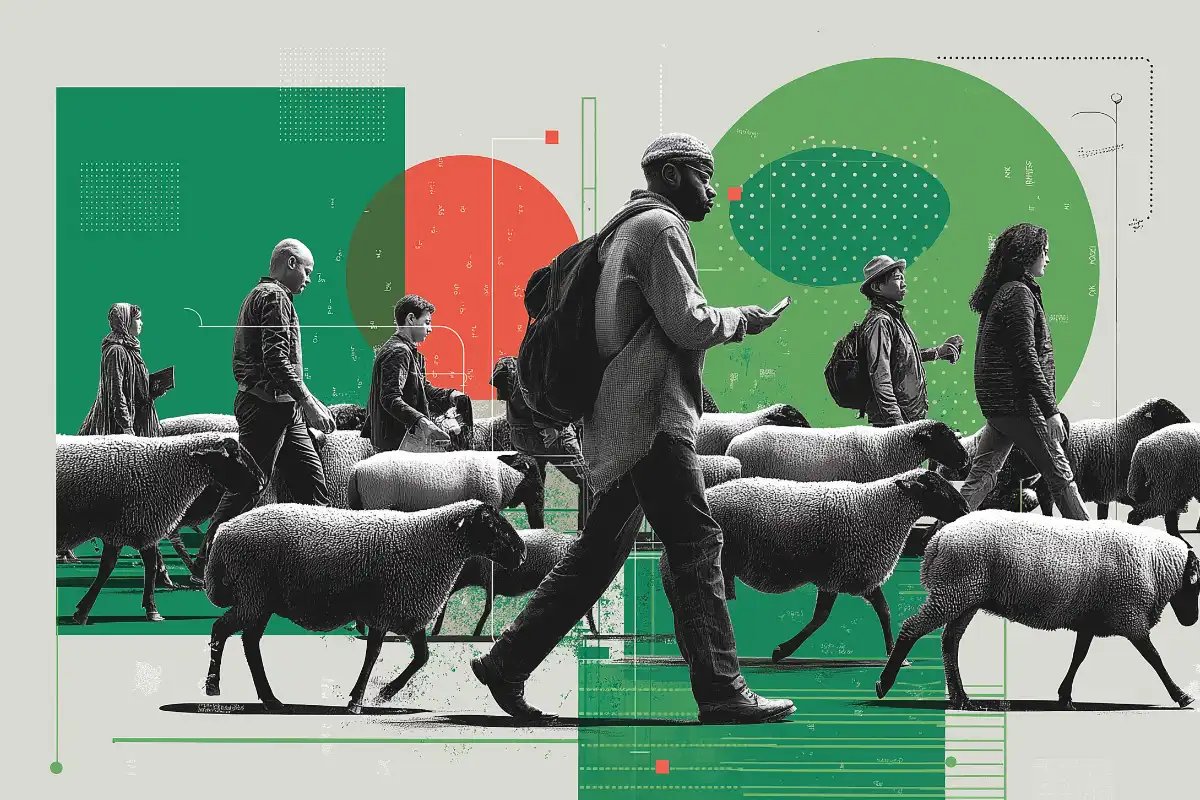
But fine is not great. And when every product is being generated by the same underlying models, trained on the same design patterns, referencing the same components, something starts to flatten. Products begin to look alike. The edges soften. The personality evaporates.
"AI outputs are competent but generic. The difference between a good product and a great one is still human judgment."
David Robinson, 2026 [8]
This is the opening that taste fills.
But, what Is taste, exactly?
Taste is one of those words that sounds fluffy until you try to operate without it. In design discourse it's often treated as either an innate gift or a suspicious buzzword — something that gets name-dropped in critiques to sound authoritative, without anyone having to define it.
But taste, properly understood, is neither mystical nor vague. It is the accumulated ability to recognise and produce quality.
As design educator Kevin Flores describes it, taste is the point where your tactical evaluative skills, your knowledge of heuristics, design principles, and interaction patterns — meet your understanding of what delights a specific user in a specific context.[9] It's the ability to look at two solutions that both technically solve the problem and know, with confidence and reasoning, which one is better.
"AI is powerful but taste-blind."
— Sari Azout, founder of Sublime [9]
The model can generate a hundred layout variations. It cannot tell you which one will feel like a breath of fresh air to a busy user. That contextual, human, culturally tuned judgment is taste. And it is what the machine cannot replicate.
Figma's Wayne Sun captured this well: intuition becomes substance; taste becomes repeatable.[10] The most forward-thinking teams are now building taste into their design systems. They're encoding their aesthetic decisions so thoroughly that when AI generates components and flows, those outputs carry the sensibility of the designer not just the defaults of the model. Design systems, once about consistency, are becoming vessels for creative identity.
Why taste is now a strategic asset.
There is a business case here, not just a creative one. When everyone has access to AI prototyping tools, speed is table stakes. Execution becomes cheap. What becomes expensive and genuinely rare is the ability to curate, to edit, to choose the right thing among an infinite number of possible things.
This is why hiring managers are increasingly looking for designers who pair AI fluency with human judgment, creativity, and collaboration.[11] Figma's 2025 design hiring research found that design job postings were up roughly 60% year-on-year, and that taste and intuition were taking an increasingly central role in what organisations were looking for precisely because more people were now participating in the design process.
Ironically, as AI democratises the ability to make things, the value of knowing what to make and what to leave out goes up.
This is the craft of a senior product designer operating at full power. Not the ability to build a prototype, but the ability to look at twenty AI-generated prototypes and know which two are worth pursuing, which interaction needs deeper thinking, and why that one transition feels wrong even if you can't explain it in words yet. The ability to explain it to bring language and reasoning to an aesthetic instinct is what turns taste into influence.
The designer's new role.
None of this suggests that designers should resist AI or treat these tools with suspicion. The opposite is true. The designers who will thrive are those who use AI to handle the scaffolding, freeing themselves to spend more time on the decisions that only a human can make well.
That means spending less time assembling components and more time studying users. Less time at the fidelity dial and more time pressure-testing ideas with real people. Less time arguing about spacing and more time shaping strategy.
Refining your taste.
It also means developing taste deliberately, not treating it as something you either have or don't. Taste is cultivated by consuming design critically, building a vocabulary for quality, and developing the courage to make opinionated choices rather than defaulting to what the model generates first.
As Nielsen Norman Group concluded in their evaluation, AI tools are best suited for ideation and early-phase exploration, not final craft.[4] The human designer remains essential for understanding user needs, ensuring quality, and most importantly making the calls that require judgment rather than pattern-matching.[12]
The machine can prototype.
It cannot have taste.
That's still yours.
References
- Prototyp Digital — The Promise of AI-Driven Prototyping in 2025. prototyp.digital/blog/ai-prototyping-digital-product
- Halpern, J. — Thoughts on the Future of Product Design in an AI-First World, Generative AI on Medium (December 2024). generativeai.pub
- Lenny's Newsletter — A Guide to AI Prototyping for Product Managers (January 2025). lennysnewsletter.com
- Nielsen Norman Group — Good from Afar, But Far from Good: AI Prototyping in Real Design Contexts (October 2025). nngroup.com
- Parallelhq — Future of Design with AI: Complete Guide (2025). parallelhq.com
- Figma — Figma AI: Your Creativity, Unblocked. figma.com/ai
- Atlassian Work Life — The Future Roadmap: Navigating the Next Decade as a Product Designer in Tech (January 2025). atlassian.com
- Robinson, D. — AI in Product Design: Where We Are Now in 2026, Medium (February 2026). medium.com
- Flores, K. — Having Taste in the Age of AI, Medium (May 2025). medium.com
- Figma Blog — 5 Shifts Redefining Design Systems in the AI Era (November 2025). figma.com/blog
- Figma Blog — Why Demand for Designers Is on the Rise (February 2026). figma.com/blog
- Product School — AI in Product Design: Best Practices, Use Cases, Top Tools. productschool.com